
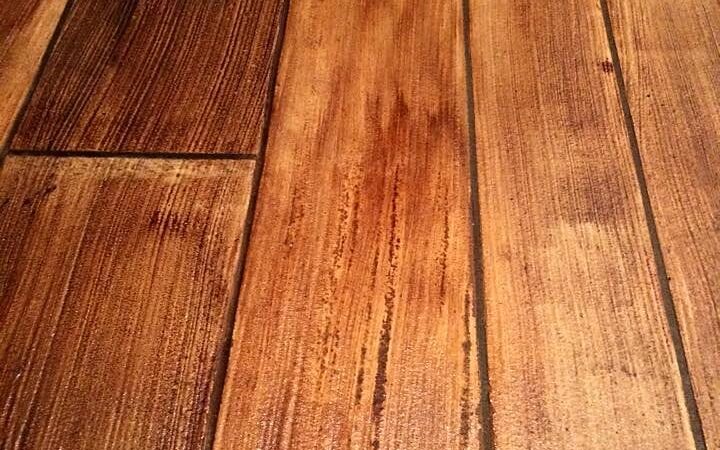
Oak has earned its place as the default hardwood in American homes, and for good reason. But in the luxury properties we install across Chicagoland, homeowners are increasingly asking a better question: what else is out there? Walnut, maple and hickory each bring a distinct personality to a floor, and each behaves differently underfoot, under light and under the demands of a Midwestern year.
Choosing a species is one of the few flooring decisions that is genuinely permanent. Finish can be changed. Furniture moves. The wood itself stays. Here is an honest look at three species worth considering for your next project.
American Black Walnut: Depth Without Stain
Walnut is the species people fall in love with in a showroom. Its color is naturally deep — chocolate browns shading toward purple and grey — and unlike a stained oak, that color runs all the way through the board. The grain is soft and flowing rather than busy, which makes wide planks look calm instead of chaotic.
The trade-off is hardness. Walnut is noticeably softer than oak, and it will take dents and scuffs more readily. In a formal living room, a primary suite or a study, that patina reads as character. In a mudroom off a three-car garage in Barrington, it reads as damage.
Two things worth knowing before you commit:
- Walnut lightens over time. Where oak ambers with age, walnut mellows toward a warmer, softer brown, particularly in direct sun.
- It pairs beautifully with light walls. If you are working through the hardwood options for a room with significant natural light, walnut gives you drama without a heavy stain.
Maple: The Quiet Modernist
Hard maple is the opposite of walnut in almost every way. It is pale, tight-grained and remarkably uniform — closer to a smooth surface than a textured one. In contemporary new construction across the northwest and North Shore suburbs, maple delivers the clean, gallery-like floor that heavy-grained species simply cannot.
It is also genuinely hard, which makes it a practical choice for busy households. The complication is finishing. Maple’s dense, closed grain does not absorb stain evenly, and a dark stain on maple can blotch in ways that are impossible to correct after the fact. Anyone who has seen a badly stained maple floor understands why we steer clients toward natural or very light finishes on this species.
Left clear-coated, maple is stunning. Ask us to show you examples in our project gallery before deciding.
Hickory: Character, Strength and a Point of View
Hickory is the hardest of the common domestic hardwoods, and it looks the part. Boards run from near-white sapwood to deep caramel heartwood, often within the same plank, producing a floor with real visual movement. In an estate with tall ceilings and generous rooms, that variation feels intentional and grand.
In a small room, it can feel loud. Hickory demands space to breathe, which is why it works so well in open, large-format layouts and less well in a compact hallway.
Its hardness makes hickory an excellent candidate for high-traffic zones — kitchens, family rooms, homes with large dogs. It is also a species where wide planks pay off, since the color range needs room to resolve into a pattern rather than a jumble.
How These Species Behave in a Chicago Climate
Every solid hardwood moves with humidity, and Chicagoland asks a lot of a floor: humid summers followed by winters where forced-air heat drops indoor humidity dramatically. Wider boards and less dimensionally stable species will show that movement more.
Practically, this means a few things for luxury homes here:
- Acclimation is not optional. Material needs to sit in the conditioned space until it reaches equilibrium with the home.
- Humidity control matters more than species choice. A whole-home humidifier holding 35–50% through winter protects any floor you install.
- Engineered construction is a legitimate option. Walnut, maple and hickory are all available as engineered planks, which give you the same visible wood species with far greater dimensional stability — particularly valuable over concrete slabs, in basements or over radiant heat.
Choosing With Confidence
There is no universally best species. There is a best species for a specific room, a specific light exposure and a specific way of living. Walnut for warmth and formality. Maple for clean, modern restraint. Hickory for durability and character.
What matters as much as the choice itself is the installation. Species with strong color variation need thoughtful board sequencing. Maple needs a finishing plan settled before the first plank is laid. Wide walnut needs a subfloor prepared to a tighter tolerance than a builder-grade floor would ever require. This is where 25+ years of craftsmanship shows up in the finished result.
One practical note as you plan: ANA installs in cleared, ready spaces. We do not move furniture or remove existing carpet, so it is worth arranging that work ahead of your install date. You can read more about how we work before your project begins.
Planning a flooring project in Chicagoland?
ANA Flooring brings 25+ years of craftsmanship to luxury homes, estates and new construction across the Chicago suburbs.