
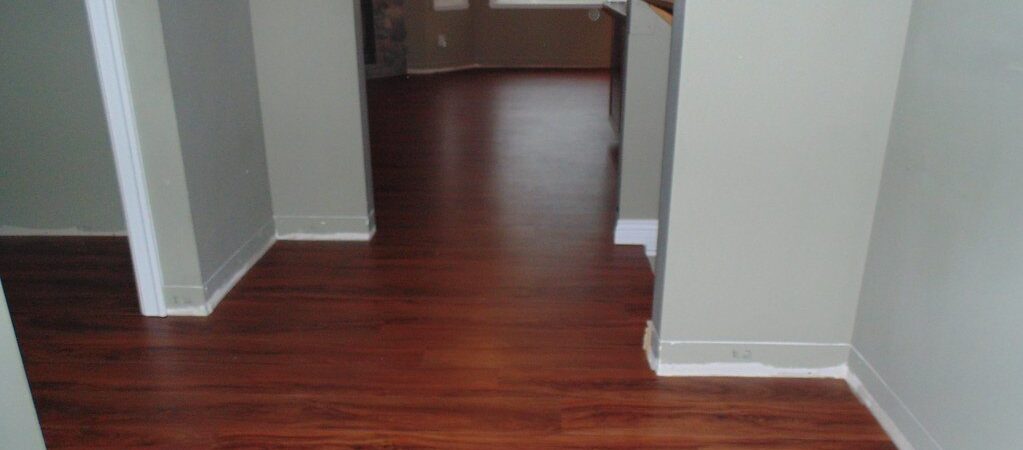
Few decisions shape a luxury home as profoundly as the floor beneath it. In Chicagoland, that choice carries an extra layer of consideration: our climate. Humid summers, bone-dry heated winters and dramatic swings in between put every wood floor to the test. Understanding how solid and engineered hardwood respond to those conditions is the first step toward a floor that stays beautiful for decades.
Why Chicago’s Climate Matters for Wood Floors
Wood is a natural material, and it breathes. As indoor humidity rises and falls with the seasons, boards absorb and release moisture, expanding and contracting in the process. Across the Chicago suburbs, relative humidity can climb well above comfortable levels in July, then plunge in January once forced-air heating is running around the clock.
A well-installed floor accommodates that movement gracefully. A poorly matched one shows it through gaps, cupping or crowning. That is why the question is rarely “which is better?” and almost always “which is better for this room, this subfloor and this home?”
Solid Hardwood: The Timeless Standard
Solid hardwood is milled from a single piece of lumber, typically three-quarters of an inch thick. It is the traditional choice for estates and custom homes, and for good reason.
- Refinishing potential: A solid floor can be sanded and refinished many times, often outlasting the generation that installed it.
- Authentic character: Every board carries the full depth of the grain, which gives a richness that is hard to match.
- Value: Real, site-finished hardwood is a hallmark of luxury homes and resonates strongly with buyers.
The tradeoff is dimensional movement. Solid boards respond more noticeably to humidity swings, so they perform best on or above grade, over a properly prepared wood subfloor, in homes where indoor humidity is managed year-round. Explore the character of solid hardwood on our flooring types page.
Engineered Hardwood: Stability by Design
Engineered hardwood pairs a genuine hardwood wear layer with a multi-ply core arranged in alternating directions. That cross-layered construction resists the expansion and contraction that challenge solid planks, which makes it especially well suited to Chicagoland conditions.
- Dimensional stability: The layered core stays calmer through seasonal swings, helping keep seams tight.
- Wider, longer planks: Stability allows for the dramatic wide-plank formats that define modern luxury interiors.
- Versatile installation: Engineered products can often be glued down over concrete, and many suit radiant-heated floors.
The wear layer thickness matters. A thicker layer allows for refinishing, while thinner ones are more limited. See how engineered hardwood is built and where it shines.
Matching the Floor to the Space
In our experience across the north, northwest, west and southwest suburbs, the best answer often differs room by room.
- Main living areas and upper levels: Solid hardwood is a superb choice where a wood subfloor and steady humidity control are in place.
- Lower levels and slab foundations: Engineered hardwood is typically the more dependable option over concrete.
- Radiant heat: Engineered construction generally handles temperature cycling better, though the specific product and heating system should always be reviewed.
- New construction: Newly built homes release moisture as they cure, so timing and acclimation are critical for either material.
Whichever you choose, species, finish and lay pattern are where the design truly comes alive. Browse our floor patterns for inspiration, from classic planks to herringbone and custom borders.
Details That Protect Your Investment
Product choice is only half the equation. Long-term performance depends on preparation and installation.
- Acclimation: Allow materials to adjust to your home’s environment before installation.
- Subfloor readiness: The surface must be flat, clean and dry.
- Humidity control: Keeping indoor humidity in a steady range protects both solid and engineered floors.
Please note that ANA Flooring installs in cleared, ready spaces. We do not move furniture or remove existing carpet, so plan for the room to be prepared before our crew arrives.
Both options can be exceptional. Solid hardwood offers heritage and refinishing longevity, while engineered hardwood offers resilience and design flexibility. The right answer is the one that fits your home’s structure, your lifestyle and your vision.
Planning a flooring project in Chicagoland?
ANA Flooring brings 25+ years of craftsmanship to luxury homes, estates and new construction across the Chicago suburbs.