
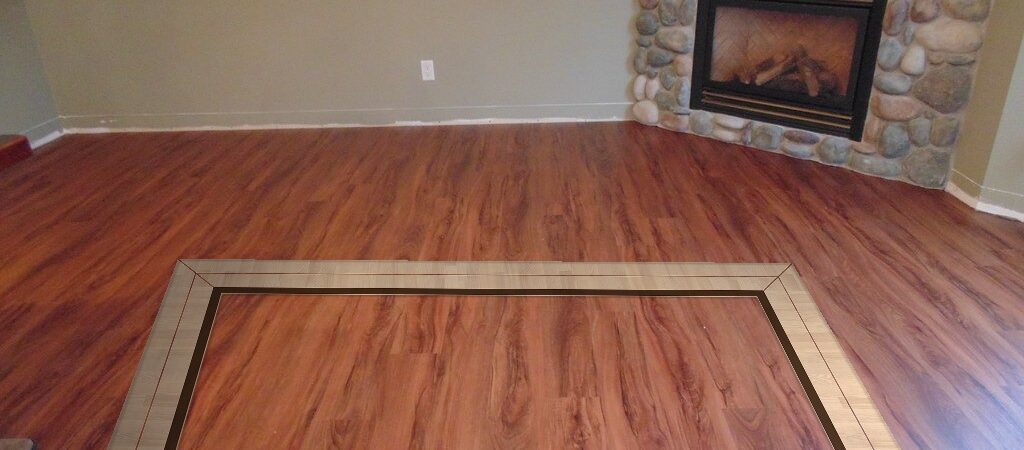
Walk into a truly grand home and the first thing underfoot often says more than anything on the walls. In luxury homes across Chicagoland, floor medallions and inlays have become the signature detail that separates a beautiful hardwood floor from an unforgettable one. These handcrafted focal points, set into the entryway or foyer, greet every guest with a statement of craftsmanship the moment the front door opens.
At ANA Flooring, we have spent more than 25 years installing hardwood in estates, custom builds and new construction throughout the Chicago suburbs, and few projects are as rewarding as a custom medallion or inlay. Here is what they are, where they shine, and how to plan one for your own home.
What Are Floor Medallions and Inlays?
A floor medallion is a decorative centerpiece, most often circular or oval, set flush into the surrounding hardwood field. Classic designs include compass roses, sunbursts, geometric stars and floral motifs, assembled from contrasting wood species such as walnut, maple, cherry and wenge alongside the main oak floor.
An inlay is the broader family this belongs to: any contrasting material worked into the floor itself. That includes feature strips, corner accents, monograms and decorative borders. One of the most popular inlay treatments in the Chicago suburbs is the floor picture frame, a border of contrasting wood that outlines a room or hallway the way a frame surrounds a painting. Medallions and picture frames pair beautifully; the frame defines the space while the medallion anchors it.
Why Grand Foyers Are the Perfect Setting
The foyer is where a home makes its first impression, and it is usually the one space with open floor visible from every angle. A medallion placed beneath a chandelier or centered on the front door’s sightline creates instant symmetry and a sense of arrival that luxury homes are designed around.
Foyers also suit medallions practically. There is no furniture to cover the design, the traffic pattern flows around it naturally, and the space typically connects to hallways and staircases where coordinating borders can carry the theme deeper into the home. In two-story foyers, the view from the landing above turns the floor itself into artwork.
Design Choices: Wood Species, Pattern and Scale
The most successful medallions are planned, not picked from a catalog at random. Three decisions matter most:
- Contrast level. High contrast, such as dark walnut set into white oak, reads bold and traditional. Subtle contrast, like rift-sawn oak in two finishes, suits modern luxury homes where restraint is the point.
- Pattern language. A compass rose feels timeless in a classic estate; a clean geometric ring complements contemporary new construction. The medallion should echo other lines in the home, from stair balusters to ceiling medallions above.
- Scale. As a rule of thumb, a foyer medallion looks best when it occupies roughly a third to half of the open floor area, leaving a generous field of hardwood around it. Oversized medallions crowd the space; undersized ones look like an afterthought.
Medallions can also be paired with patterned fields such as herringbone or chevron, with the pattern breaking gracefully around the centerpiece. Browse our project gallery to see how these elements come together in real Chicagoland homes.
How Medallions Are Installed
A medallion installation is precision work. The field floor is installed first, then the medallion’s outline is routed into the finished field with a template, cut clean to the exact shape. The medallion, whether pre-assembled or built piece by piece on site, is set into the recess, glued, leveled and sanded flush so the entire floor reads as one continuous surface. Finish is applied across field and medallion together, which is what gives a quality installation that seamless, mirror-smooth result.
Because tolerances are measured in fractions of a millimeter, this is not a project for a general handyman. Grain direction, seasonal wood movement and species hardness all have to be accounted for, particularly in Chicago’s climate, where humidity swings from muggy summers to dry, heated winters. An experienced installer selects and acclimates materials so the medallion stays tight and flat year after year.
Planning a Medallion for Your Home
If you are building or renovating, the best time to plan an inlay is early, while layout, transitions and stair details are still on paper. A few practical notes from our crews:
- Center the medallion on a sightline that matters, usually the front door or the chandelier above, and confirm the layout with a dry fit before any cutting.
- Coordinate borders and feature strips in adjoining hallways so the design feels intentional throughout the main level.
- Have the space cleared and ready before installation begins. ANA Flooring installs in prepared, empty rooms, which protects both your furnishings and the precision of the work.
Costs vary widely with size, complexity and wood species, so rather than guessing from a chart, the smart move is to bring your foyer dimensions and inspiration photos to a quote conversation. You can read more about our craft and background on our about page.
A well-executed medallion outlasts trends. Decades from now it will still be the detail guests remember, the piece of the home that could only have been made by hand.
Planning a flooring project in Chicagoland?
ANA Flooring brings 25+ years of craftsmanship to luxury homes, estates and new construction across the Chicago suburbs.