
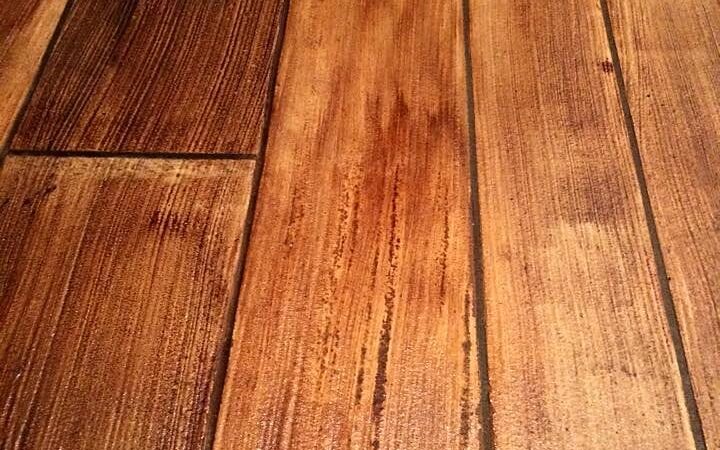
Every beautiful hardwood floor you have ever admired in a Chicagoland luxury home shares one thing in common: before a single board was fastened down, the wood was given time to settle into its new environment. This quiet, unglamorous step is called acclimation, and it is one of the clearest markers separating a true craftsman installation from a rushed one. Skip it, and even the finest white oak can cup, gap, or crown within its first year. Honor it, and your floor will stay flat, tight, and elegant for decades.
Because Chicago’s climate swings from humid summers to bone-dry winters, acclimation matters more here than in almost any other market. Here is what every homeowner and builder in the Chicago suburbs should understand before installation day.
What Acclimation Actually Means
Wood is hygroscopic: it constantly absorbs and releases moisture until it reaches equilibrium with the air around it. Flooring that arrives from a warehouse or delivery truck rarely matches the conditions inside your home. Acclimation is simply the process of letting the material rest inside the room where it will be installed, stacked so air can circulate, until its moisture content stabilizes.
For solid hardwood, this typically takes several days to a week or more, depending on the species, the width of the boards, and the season. During that time, a professional installer measures the moisture content of both the flooring and the subfloor with a meter. The generally accepted target is a difference of no more than a few percentage points between the two. Guesswork has no place here; the numbers decide when the wood is ready.
Why Chicago’s Climate Raises the Stakes
The Chicago area experiences some of the widest indoor humidity swings in the country. A July afternoon can push indoor relative humidity toward 60 percent, while a January cold snap with the furnace running can drop it below 25 percent. Wood responds to every one of those changes by expanding and contracting across the width of each board.
A floor installed without proper acclimation locks that instability into the installation itself. Common results include:
- Gapping: boards installed too moist shrink in winter, leaving visible seams between planks.
- Cupping: boards installed too dry absorb summer humidity and curl upward at the edges.
- Crowning and buckling: in severe cases, swollen boards press against each other until the floor lifts.
These problems are especially unforgiving in luxury homes, where wide-plank flooring is the standard. A 7-inch plank moves roughly three times as much as a 2¼-inch strip, so the margin for error shrinks as the boards grow. The same caution applies to decorative work: picture-frame borders and herringbone or chevron patterns depend on tight, precise joints that only stable wood can hold.
Engineered Wood Changes the Math, Not the Rules
Because of its cross-layered core, engineered hardwood is far more dimensionally stable than solid wood, which is one reason it has become a favorite for new construction across the Chicago suburbs. But stability is not immunity. Engineered planks still need time on site, and the home itself must be ready: HVAC running, drywall and paint fully dry, and indoor conditions held within the range the homeowner will actually live in, generally 30 to 50 percent relative humidity.
This is why experienced builders schedule flooring as one of the final trades. Delivering hardwood into a house with wet plaster or no climate control does not acclimate the wood; it sabotages it.
What Proper Acclimation Looks Like on Site
When a quality installation team handles acclimation, the process is deliberate and measurable. The home is brought to normal living conditions before delivery. The flooring is moved into the actual rooms being floored, not a garage or basement. Boxes are opened or cross-stacked so air reaches the boards. Moisture readings are taken on arrival and repeated over the following days, and installation begins only when flooring and subfloor readings converge.
One practical note for planning: the rooms need to be empty and ready during this window. ANA Flooring installs in cleared, prepared spaces, so furniture removal and old carpet tear-out should be arranged before the wood arrives on site.
Patience Now, Perfection for Decades
Acclimation costs nothing but a few days of patience, yet it protects an investment that can define a home for generations. It is also the kind of step that reveals how an installer works when no one is watching. Ask any flooring contractor how they handle moisture testing and acclimation before committing to a project; the answer will tell you a great deal about the floor you will be living on.
To see what properly installed hardwood looks like years down the road, browse our project gallery or learn more about our approach to craftsmanship.
Planning a flooring project in Chicagoland?
ANA Flooring brings 25+ years of craftsmanship to luxury homes, estates and new construction across the Chicago suburbs.