
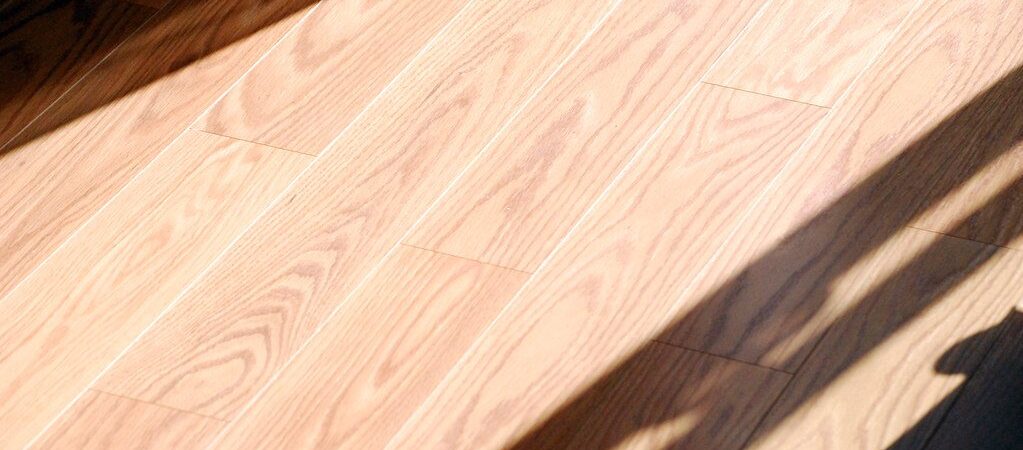
Choosing hardwood for a luxury home involves more decisions than most homeowners expect. Beyond species, plank width and stain color, there is a question that shapes the entire installation experience: should your floors arrive already finished from the factory, or be sanded and finished on site, in your home? Across Chicagoland, we install both, and each has a rightful place. Understanding the trade-offs will help you choose with confidence.
What Is Prefinished Hardwood?
Prefinished hardwood is sanded, stained and sealed at the factory before it ever reaches your home. Each board arrives with a fully cured finish, typically an aluminum-oxide-infused urethane that is remarkably hard-wearing. Installation is the only step that happens on site, which makes the process faster and cleaner.
The advantages are real. There is no dust from sanding, no finish odor, and no waiting for coats to dry. In many cases you can walk on the floor the same day it goes in. Factory finishes are also applied under controlled conditions, so their durability is consistent from board to board, and manufacturer warranties on the finish often run 25 years or more.
The trade-off is visible at the edges. Prefinished boards have a slight bevel where each plank meets the next, creating fine grooves across the floor. Some homeowners like the definition this gives each board; others prefer a perfectly smooth, continuous surface.
What Is Site-Finished Hardwood?
Site-finished (or unfinished) hardwood arrives raw. After installation, the entire floor is sanded flat as a single surface, then stained and sealed in place. This is the traditional method, and it remains the gold standard for high-end custom work.
Why? Control and continuity. Sanding after installation levels every board into one seamless plane with no bevels, and the stain is blended across the whole floor at once, giving a depth and uniformity that factory finishing cannot fully replicate. Site finishing is also the only practical route to truly custom colors, matching an existing floor in an older North Shore home, or executing decorative work such as picture-frame borders and inlays, where the border and field must be sanded and finished together as one surface.
The cost of that beauty is time. Expect several days of sanding, staining and multiple finish coats, plus cure time before the room returns to service. Modern dust-containment systems keep the mess manageable, but it is a more involved process than laying prefinished boards.
How Chicago’s Climate Factors In
Chicagoland homes swing from humid summers to dry, heated winters, and solid hardwood responds by expanding and contracting across the seasons. Both prefinished and site-finished floors handle this well when properly acclimated and installed, but the finish type changes how movement reads. The micro-bevels on prefinished boards conceal minor seasonal gapping between planks, while a site-finished floor’s smooth surface can make winter gaps slightly more noticeable. On the other hand, a site-applied finish seals the seams between boards, adding a measure of protection against everyday moisture.
For rooms over radiant heat or below grade, the finish question is often secondary to the platform itself; engineered hardwood, which is dimensionally more stable, is usually the wiser starting point in those settings.
Which Should You Choose?
There is no universal winner, but clear patterns emerge from the projects we see across the Chicago suburbs:
- Choose prefinished when speed and cleanliness matter most: occupied homes, quick renovation timelines, or projects where the room needs to be back in use within a day or two.
- Choose site-finished when the vision calls for a custom stain, a glass-smooth continuous surface, a match to existing floors, or decorative details like borders, medallions and patterned layouts such as herringbone.
- New construction often favors site finishing, since the home is empty and the schedule can absorb cure time, letting builders deliver a truly bespoke result.
- Luxury remodels increasingly split the difference: premium wide-plank prefinished lines now offer wire-brushed textures and matte sheens that rival custom work.
Cost varies with species, plank width and finish system rather than falling neatly on one side of this divide. High-end prefinished planks can exceed the cost of site-finished material, while site finishing adds labor days. As always with hardwood, it is worth pricing your specific design rather than relying on rules of thumb.
Craftsmanship Makes the Difference
Whichever route you choose, the outcome depends on the hands doing the work. Precise subfloor preparation, correct acclimation, tight racking and, for site-finished floors, expert sanding are what separate a good floor from a flawless one. With 25+ years of experience installing hardwood in luxury homes and new construction across Chicagoland, ANA Flooring works in cleared, ready spaces and treats every installation, prefinished or custom-finished, with the same exacting standard. Browse our gallery to see both approaches beautifully executed.
Planning a flooring project in Chicagoland?
ANA Flooring brings 25+ years of craftsmanship to luxury homes, estates and new construction across the Chicago suburbs.