
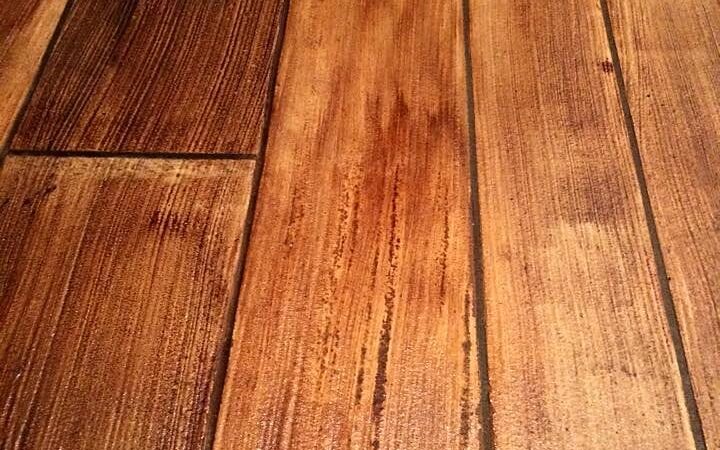
Two floors can be milled from the same white oak log, finished with the same stain, and installed in the same room, and still look nothing alike. The difference usually is not the species or the color. It is the cut. How a board is sawn out of the log determines its grain figure, how it moves with the seasons, and how much it costs. For luxury homes across Chicagoland, that single decision quietly shapes the character of an entire floor.
Here is what plain sawn, rift sawn and quarter sawn actually mean, and how to choose between them for your home.
How a Log Becomes a Floor
A log is a bundle of growth rings. When a mill slices those rings at different angles, it exposes different faces of the wood, and each angle produces a distinct look and a distinct level of stability.
- Plain sawn (also called flat sawn) is cut straight across the log in parallel slices. It yields the most usable board feet, which makes it the most common and most affordable cut.
- Quarter sawn begins by splitting the log into quarters, then cutting each quarter so the growth rings meet the board face at roughly 60 to 90 degrees.
- Rift sawn is cut at approximately 30 to 60 degrees to the growth rings, radiating out from the center of the log like spokes on a wheel.
Rift and quarter sawn boards waste considerably more of the log, which is the honest reason they carry a premium. You are paying for the timber that got left behind.
What Each Cut Looks Like Underfoot
Plain sawn gives you the classic cathedral grain: those broad, arching, flame-shaped patterns most people picture when they picture a wood floor. It reads warm, lively and traditional. In a family room or a rustic-leaning kitchen, that movement is part of the appeal.
Quarter sawn produces tight, straight, parallel grain lines. In oak it also reveals medullary rays, dramatic ribbons of figure often called flake or tiger stripe. It is the signature look of Arts and Crafts and Prairie School interiors, which gives it real resonance in Oak Park, Evanston and the North Shore homes that grew out of that tradition.
Rift sawn is the quietest and most linear of the three. Straight grain, no cathedrals, almost no flake. It is the cut designers reach for when they want a floor to read as a calm, uninterrupted plane rather than a pattern. Pair it with wide-plank hardwood and the effect is remarkably serene.
Many high-end floors are specified as rift and quartered, a blend of the two cuts that delivers straight grain with occasional flake and costs somewhat less than pure rift.
Stability: Why This Matters in Chicago
Wood expands and contracts with humidity, and our climate swings hard, from humid July afternoons to bone-dry January mornings with the furnace running. Plain sawn boards move mostly across their width, which is why wide plain sawn planks are the most likely to cup, crown or open seasonal gaps.
Rift and quarter sawn boards move primarily through their thickness instead, so face movement is meaningfully lower. Practically, that means:
- Fewer visible gaps in deep winter
- Less cupping in a humid basement-adjacent space or a lakefront home
- Better behavior over radiant heat and in wide-plank formats
None of this replaces proper acclimation and year-round humidity control. It simply gives the floor more margin when conditions drift.
Choosing the Right Cut for Your Project
There is no universally superior option, only the right fit for the room and the design intent.
Choose plain sawn when
You want traditional character and visible grain movement, you are working within a defined budget, or you are covering large square footage where cost scales quickly. It remains a beautiful, entirely legitimate luxury floor.
Choose quarter sawn when
You are restoring or honoring a period home, you love the flake figure, or you want a floor with genuine historical credibility in a craftsman or transitional interior.
Choose rift sawn when
You are building a clean, contemporary or minimalist space, specifying very wide planks, or laying a herringbone or chevron pattern where busy grain would compete with the geometry. Rift is also the safest choice for whole-floor consistency in new construction across the Chicago suburbs.
A Note on Stain and Sample Size
Cut affects how a floor takes stain. Tight rift and quarter sawn grain absorbs color more evenly, while plain sawn’s cathedrals can drink in pigment and turn dramatic, especially with darker tones. If you are considering a stain, always look at it on the actual cut you intend to buy.
Judge samples large, too. A three-inch chip tells you almost nothing about how grain will read across a great room. Ask to see a substantial layup, or walk finished installations in our project gallery to see how each cut behaves at full scale.
Getting It Specified Correctly
Cut should be written into your flooring order alongside species, width, grade and finish. It is not an upgrade you can add later. With 25+ years installing luxury floors across the north, northwest, west and southwest suburbs, our team helps homeowners, designers and builders make this call early, while it is still just a line on a purchase order.
One practical planning note: ANA Flooring installs in cleared, ready spaces. We do not move furniture or remove existing carpet, so please arrange for the room to be empty and prepped before installation day. You can learn more about how we work before your project begins.
Planning a flooring project in Chicagoland?
ANA Flooring brings 25+ years of craftsmanship to luxury homes, estates and new construction across the Chicago suburbs.